


For years, one of the simplest ways to measure SEO success was to look at website traffic. A business would rank on Google, users would click the result, visit the website and hopefully become a customer.
But Google Search is changing.
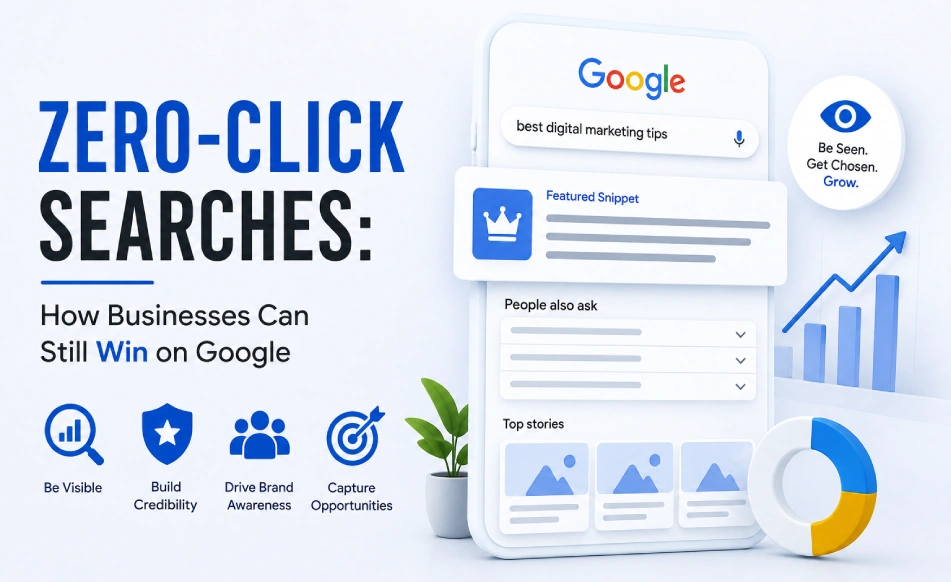
Today, users can often find the information they need directly on the search results page without clicking through to a website. They may see an AI Overview, a featured snippet, local business information, a knowledge panel, product information, FAQs or other search features that provide an answer immediately.
This behaviour is commonly referred to as a zero-click search because the user gets useful information from Google without clicking an organic result.
For businesses, this may initially sound like bad news. If fewer people click, does SEO still matter?
The answer is yes—but the way businesses measure and approach SEO needs to evolve.
Google’s current AI search experiences, including AI Overviews and AI Mode, are designed to provide answers while also presenting links that allow users to explore information further. Google continues to state that traditional SEO fundamentals remain relevant for these experiences.
The objective is no longer simply to generate clicks. Businesses need to build search visibility, brand recognition, trust and qualified conversions.
What Are Zero-Click Searches?
A zero-click search happens when a person searches for something on Google but does not need to visit another website to get the information they were looking for.
Consider a simple search such as:
“What is digital marketing?”
Google may provide a direct explanation within the search results.
Similarly, a person searching for:
“SEO company near me”
may see local business listings, locations, ratings and contact information before traditional organic results.
Someone searching for a quick fact may receive the answer immediately, while a user researching a more complicated topic may see an AI-generated summary with links to supporting sources.
The important point is that the Google results page itself has become much more informative.
Google explains that its AI features are designed to help people understand complicated questions more quickly while providing links that allow them to explore content across the web.
This means businesses should not automatically interpret every search that doesn’t generate a click as a failed SEO opportunity.
Sometimes visibility itself has value.
Why Zero-Click Searches Matter for Businesses
The traditional SEO model was straightforward:
Search → Click → Website → Conversion
The modern search journey can look more like:
Search → Google Result → Brand Visibility → Further Search → Website → Conversion
A potential customer may see a company’s name several times before ever visiting its website.
For example, someone researching website development may initially encounter a business through an informational article, then see its brand in another search, discover its local listing later and eventually visit the website when they are ready to request a quotation.
The first search may not generate a click, but it can still contribute to brand recognition.
This is why businesses need to distinguish between traffic generation and search visibility.
Both matter, but they serve different purposes.
AI Overviews Are Changing the Search Experience
The growth of AI-powered Search has made zero-click behaviour even more important.
Google’s AI Overviews can provide an AI-generated snapshot of information along with links to relevant sources. Users can then explore those sources or continue their research through follow-up questions.
This creates a different relationship between a website and Google.
A website may contribute information to a search experience even when the user does not immediately click through.
For businesses, this makes the quality and usefulness of website content increasingly important.
Google’s guidance for AI search emphasizes unique, valuable and people-first content, along with technical accessibility and a strong page experience. Google also states that there are no special technical requirements specifically for appearing in AI Overviews or AI Mode beyond being eligible for normal Search.
In other words, businesses don’t need to abandon SEO fundamentals to adapt to AI.
They need to execute those fundamentals better.
Ranking Is No Longer the Only Measure of Success
A business can rank well and still receive fewer clicks for certain searches because Google provides more information directly on the results page.
This doesn’t necessarily mean the SEO campaign is failing.
Suppose a company ranks for a search such as “what is local SEO?” A user may read Google’s summary and never visit the website.
But another user who sees the same brand repeatedly while researching local SEO may later search specifically for that company.
The first interaction created awareness. The second created intent.
This is why businesses should look beyond traditional ranking reports and evaluate the complete search journey.
Important measurements can include:
Impressions: How frequently your website or brand appears in search.
Clicks: How many users visit your website.
Branded searches: Whether more people are specifically searching for your company.
Engagement: What visitors do after reaching the website.
Leads and enquiries: Whether organic visibility contributes to real business opportunities.
Conversions: Whether search traffic ultimately produces measurable business results.
Google Search Console provides data such as impressions, clicks, CTR and position, while Google introduced dedicated reporting in 2026 for visibility within generative AI features on Search for a subset of websites during its rollout.
The direction is clear: SEO measurement is becoming broader than simply counting clicks.
Create Content That Deserves to Be Clicked
If Google can answer a basic question without sending a visitor to your website, businesses need to give people a reason to go further.
This means creating content that provides more value than a short answer.
For example, instead of publishing a basic article explaining what SEO is, a business could publish:
“SEO for Small Businesses: A Practical Guide to Getting More Local Leads”
The article could include examples, common mistakes, implementation advice, costs, timelines and practical recommendations.
A user who only needs a definition may be satisfied with Google’s result.
But someone who wants to understand how to actually implement SEO may want a deeper resource.
That is where the website creates an opportunity.
Google’s guidance specifically encourages website owners to focus on unique content that provides value beyond what is already available elsewhere.
Answer Simple Questions, Then Go Deeper
Businesses should not avoid answering simple questions simply because they might produce zero clicks.
Those questions can still help establish visibility.
Instead, use a two-level content strategy.
The beginning of the page should provide a clear and useful answer to the user’s immediate question.
Then the rest of the content should provide deeper information that helps them solve the larger problem.
For example, a Websoft Techno article about “How Much Does Website Development Cost?” could quickly explain the major cost factors near the beginning.
The rest of the article could discuss design, functionality, hosting, maintenance, integrations, security, e-commerce requirements and factors that influence the final budget.
The short answer satisfies the immediate question.
The detailed content gives the visitor a reason to continue reading.
Focus on Search Intent, Not Just Keywords
Zero-click searches make search intent even more important.
A keyword by itself doesn’t tell you exactly what a person wants.
Consider the search:
“SEO services.”
The person may be looking for an agency.
Now consider:
“How does SEO work?”
This person is probably researching.
And:
“SEO agency Pune pricing.”
This person may be much closer to making a purchasing decision.
A successful SEO strategy should create content for different stages of the customer journey.
Educational content can build awareness. Detailed guides can help with evaluation. Service pages, case studies and testimonials can support purchasing decisions.
This approach reduces dependence on any single keyword or click.
Local SEO Can Help Businesses Win Without a Website Visit
Local businesses have another major opportunity.
When someone searches for a business category along with a location, Google may display local results prominently.
A potential customer may see a business name, address, phone number, reviews, operating hours and other information without immediately visiting the website.
This is a form of zero-click visibility.
For businesses that rely on local customers, maintaining accurate business information is therefore essential.
A strong Google Business Profile, consistent business information, positive customer reviews and useful website content can all contribute to local visibility.
The goal is to make the business easy to discover and easy to contact—even when the customer doesn’t initially click through to the website.
Build a Recognizable Brand
One of the most effective ways to overcome zero-click behaviour is to make people remember your brand.
If a user repeatedly sees your company name while researching a particular topic, your business can become familiar before they are ready to buy.
For example, someone researching digital marketing may encounter a company’s blog several times across different searches.
They may not click the first time.
But after seeing the same brand consistently across useful content, they may eventually search:
“Websoft Techno digital marketing services.”
That branded search demonstrates a different level of intent.
This is why SEO should work together with branding.
Businesses should aim to become recognizable within the topics and problems they want to be associated with.
Build Content Around Real Expertise
The rise of AI-generated content makes originality increasingly important.
If hundreds of websites publish essentially the same generic article, there is little reason for users to prefer one source over another.
Businesses can differentiate themselves by adding information that comes from real experience.
This could include client case studies, project examples, original observations, industry-specific recommendations, expert opinions, customer questions and lessons learned from actual work.
For example, rather than publishing another generic article about website design, a web development company could discuss “The Most Common Website Problems We Find During Business Website Audits.”
That type of article has a distinct perspective.
Google’s guidance emphasizes unique, valuable content and warns against using AI or automation primarily to produce large amounts of content without adding value.
Don’t Forget Images and Videos
Search is becoming increasingly multimodal.
People can discover information through text, images, video and other forms of content. Google recommends supporting textual information with high-quality images and videos where appropriate, particularly as its AI-powered experiences expand.
For businesses, this means a blog shouldn’t necessarily be just a block of text.
Original project photographs, explainer videos, infographics, screenshots, demonstrations and other useful visual content can strengthen the overall value of a page.
They can also create additional opportunities for discovery.
Internal Linking Becomes Even More Important
When a user arrives at your website from a search result, internal links can help them continue their journey.
A blog about SEO for small businesses could link to an article about local SEO, which could then connect to a dedicated SEO service page.
This creates a path from information to commercial intent.
It also helps search engines understand relationships between different pages on your website.
A strong internal linking structure can therefore support both SEO and conversions.
The objective is simple: don’t let a visitor reach a dead end.
Give them a logical next step.
Make Your Website the Destination for Deeper Information
If Google provides the quick answer, your website should provide the complete solution.
This is particularly important for businesses selling professional services.
A search result may answer:
“What is SEO?”
But your website can explain:
How SEO works for a specific industry. What challenges businesses commonly face. What a campaign includes. How long different activities can take. What factors affect results. What mistakes to avoid. What your agency’s process looks like. What results you’ve achieved for clients.
That level of information cannot always be reduced to a short search result.
This is where businesses can turn zero-click visibility into genuine website engagement.
Measure the Quality of Traffic, Not Just the Quantity
Google has stated that clicks from search result pages containing AI Overviews can be higher quality, with users more likely to spend time on the site. Google therefore recommends looking beyond clicks and considering outcomes such as conversions, signups, engagement and other meaningful actions.
This is an important shift for businesses.
A website receiving 10,000 low-intent visitors may generate fewer customers than a website receiving 2,000 highly relevant visitors.
Therefore, SEO reporting should connect search visibility to actual business outcomes.
Instead of asking:
“How much traffic did SEO generate?”
ask:
“How much qualified business did SEO generate?”
That is a much more useful question.
How Businesses Can Win in a Zero-Click Search Environment
The solution isn’t to fight zero-click searches.
Businesses should adapt to them.
The first step is to accept that Google is becoming a destination where users can get answers, compare information and discover brands before visiting individual websites.
The next step is to make your brand visible within that journey.
Create useful content that answers real customer questions. Develop deeper resources that provide information beyond a basic answer. Strengthen local SEO. Build a recognizable brand. Use original expertise instead of generic content. Improve website experience and internal linking. Keep your technical SEO strong.
Most importantly, measure visibility and business outcomes together.
A zero-click search is not necessarily a lost customer.
It can be the first interaction with your brand.
Final Thoughts
Zero-click searches are changing the traditional relationship between Google, websites and users.
The search results page is becoming increasingly capable of answering questions directly through featured information, local results and AI-powered experiences. At the same time, Google continues to provide pathways to websites and emphasizes the importance of useful, original content.
For businesses, the answer is not to abandon SEO.
It is to make SEO more strategic.
Your goal should be to appear when customers search, provide enough value to earn their attention, build familiarity with your brand and give them a compelling reason to explore your website when they are ready.
In 2026, winning on Google isn’t always about getting the click immediately. It’s about becoming visible, useful and memorable throughout the customer’s search journey.
At Websoft Techno, SEO can be approached as a complete digital visibility strategy—combining search optimization, website development, content marketing, local SEO and conversion-focused experiences to help businesses turn online visibility into meaningful growth.
https://addlinks.pro/JxUDM